





当前位置 : International Daily News
 发布日期:2025/9/22
 来源:International daily
 打印
打印
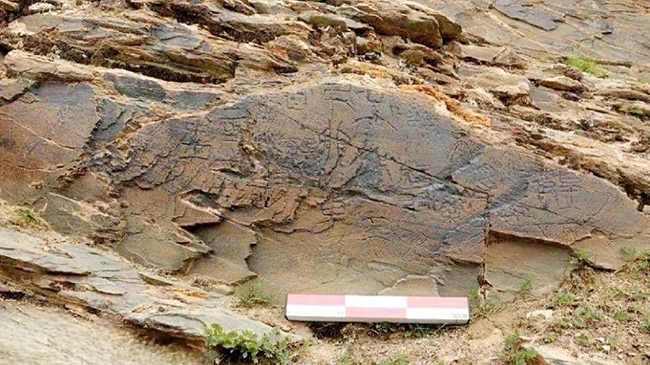
Chinese authorities have verified the authenticity of an engraved stone, discovered on the Qinghai-Tibet Plateau, as the only known Qin Dynasty (221 - 207 BC) engraved stone preserved at its original site and located at the highest altitude so far.
The stone was found on the northern shore of the Gyaring Lake in Maduo County, northwest China's Qinghai Province, at an altitude of about 4,300 meters.
The inscriptions are carved on a wall surface with a total length of 82 cm and a maximum width of 33 cm. Covers about 0.16 square meters, the area carved with characters is about 19 cm above the ground.
The entire text consists of 37 characters, arranged vertically from right to left in columns each consisting of two to four characters. The script style belongs to Qin zhuan (small seal script).
Deng Chao, director of the Department of Cultural Relics and Historic Sites of the National Cultural Heritage Administration (NCHA), said they have harnessed modern technologies to assess the facticity of the stone and will step up its protection efforts.
"Through high-precision information enhancement technology, the engraved characters on the stone exhibit distinct chisel marks, carved by using flat-edged tools consistent with the the Qin Dynasty stone engraving capacity. Mineral and metal element analysis has ruled out the possibility of modern alloy tools being used for engraving. Both the interior of the engraved marks and the surface of the stone contain weathered secondary minerals, indicating prolonged exposure to weathering and eliminating the possibility of recent carving," he said.
"The Qin-era stone inscription remains largely intact, with most characters clearly legible. As it bears a complete date including year, month, and day, unrecorded in historical texts, it stands as China's only known Qin-era stone inscription preserved at its original site and at the highest elevation. It shall be protected and managed as a national key cultural relic site. We will give it priority consideration during the selection process for the ninth batch of national key cultural relic sites," said Deng.
The finding holds significant historical, artistic and scientific value.
Emperor Qinshihuang of the Qin Dynasty unified China for the first time.

24小时最新动态

热点排行
图片新闻