



Qingdao Today
 2025/10/28
 source: International daily
 Print
Print
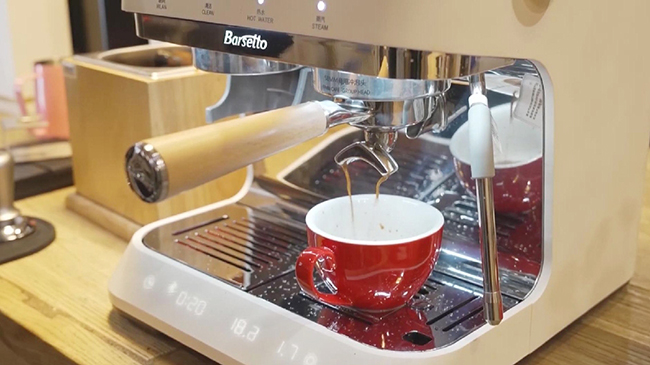
Home coffee maker sales has seen a significant increase in China so far this year, as a result of state consumption-boosting subsidies and seeping of the coffee culture deeper into daily routines in the country.
Inside a cafe in Foshan City of south China's industrial powerhouse of Guangdong Province, a handful of twenty-somethings were crowding the bar watching a barista's wrist flick back and forth, with patterns of leaves and hearts blooming in the crema. They were there for a latte-art class.
"I think coffee latte art is very artistic. I mean how a pattern like that be drawn with milk. We often swap soybean porridge for milk to have a different taste, or to show off a new pattern we just learned. It's non-stop sharing," said Chen Qiaoying, a coffee lover.
As coffee becomes part of everyday life and as home appliance subsidies are still on offer, buying a home appliance like a coffee maker is suddenly becoming a trend.
"We've just moved into our new home. Therefore, we've bought a coffee maker on an e-commerce platform, priced at almost 2,600 yuan (about 365 in U.S. dollars) apiece. The 15 percent state subsidy plus the store's own discount saved us nearly 1,000 yuan (140 U.S. dollars) in total," said Kuang Jiaxian, a consumer.
Data show that domestic coffee-machine sales hit 1.683 million units from January to August, up 75.6 percent year-on-year. By 2029, China's coffee-machine market is forecast to reach 10.6 billion yuan (1.46 billion U.S. dollars), a 28 percent compound annual growth rate.
"Since January, our domestic sales revenue has gone up by at least 50 percent. Three years ago we mainly were living on exports. Now the home market accounts for 60 to 70 percent of our total sales," said Zhang Chunlai, deputy general manager of a Foshan-based coffee-machine manufacturer.
Photos
