





当前位置 : 洛杉矶时报增刊
 发布日期:2025/11/26
 来源:International daily
 打印
打印
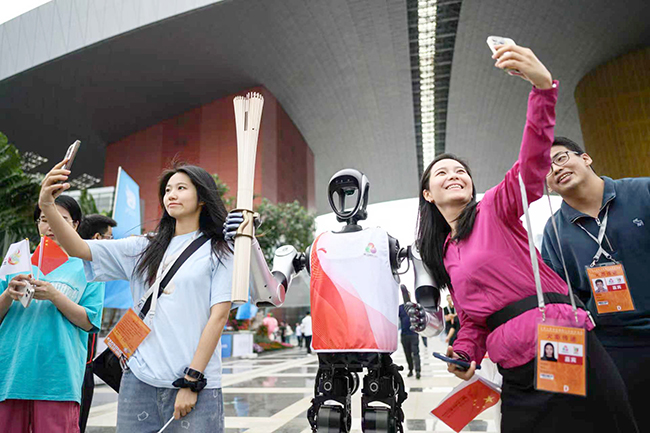
Citizens take photos with the humanoid robot torchbearer
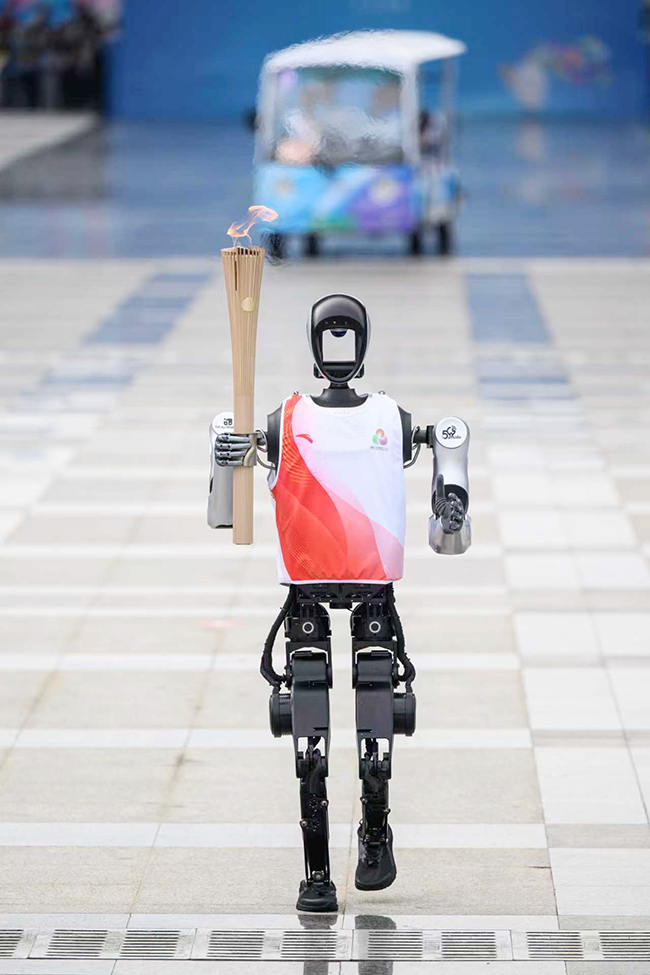
Humanoid robot torchbearer in the torch relay
On November 9, 2025, the 15th National Games of the People's Republic of China commenced at the Guangdong Olympic Sports Center. This is the first Chinese sporting spectacle in history to be jointly hosted by Guangdong Province and the Special Administrative Regions of Hong Kong and Macao. Athletes from across China gathered in the Guangdong-Hong Kong-Macao Greater Bay Area (GBA) to compete. With sustainability, sharing, openness, and integrity incorporated into the organization, the Games have utilized smart technologies, practiced an eco-friendly concept, and embraced public engagement. The Games are not just sports events, but a vivid window on the GBA's integrated development.
Smart technologies light up the Games
14 innovative technologies have been deployed in the Games, enhancing wayfinding, accessibility, and safety for spectators. As spectators entered the opening ceremony venue, Guangdong Olympic Sports Center, the technologies brought them a brand-new experience. A navigation system powered by augmented reality (AR) and Bluetooth positioning helped solve the longstanding difficulty of finding a seat in a massive arena. With just a tap or voice command on a smartphone, spectators could access directions to their seats, along with schedules and live updates. The AI-driven digital assistant "Lerongrong" offers 24-hour online consultation and a six-legged guide robot is deployed to carve out secure pathways for visually impaired spectators.
Technologies have been reinforcing safety and efficiency behind the scenes. During the 2025 Guangdong-Hong Kong-Macao Road Cycling Race, as athletes raced across the Hong Kong-Zhuhai-Macao Bridge at around 40 km/h, facial recognition and pre-clearance systems enabled six uninterrupted boundary crossings. As for power supply, the world's first AI-powered system for detecting wire faults provided real-time monitoring, and a lightning hazard simulation for the opening ceremony venue mitigated weather risks to ensure smooth operations.
Smart features have even extended to everyday conveniences: The AR-enabled digital yuan visual hard wallet made payments secure and convenient, while the "Metaverse Cloud National Games Village" allowed global audiences to immerse themselves in the event online.
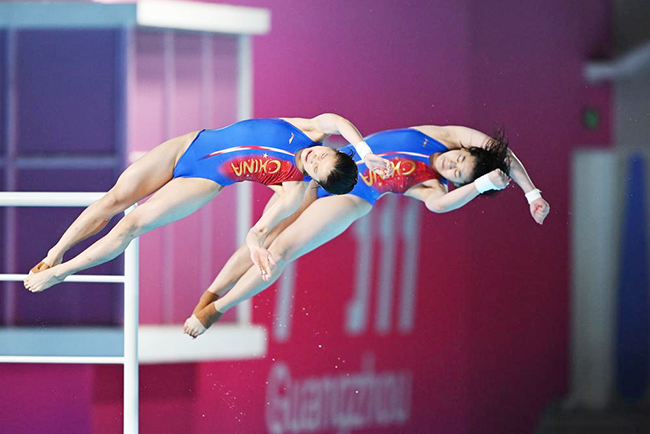
Many events at the National Games are of world-class standard
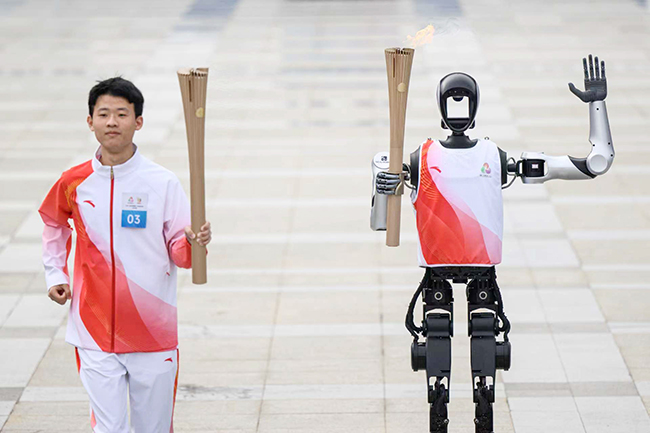
The torchbearer and the humanoid robot jointly relay the National Games torch
A key promise of the 15th National Games is that no new large venues will be built. This commitment to green operations is evident across the Games' Guangdong division, where more than 90% of the 75 competition venues are renovated facilities. Guangzhou adopted targeted micro-renovation for all 30 venues to enhance performance functions while preserving the original architectural character. The renovation of the Tianhe Sports Center stands out as a national model, marking China's first mega stadium renovation project to achieve near-zero carbon emissions. With photovoltaic facilities and optimized ventilation systems, the Center achieves a carbon reduction rate exceeding 52% and is projected to save over 1 million kilowatt-hours (kWh) of electricity annually.
Shenzhen Sports Center was renovated to meet the highest green-building standards in China, featuring sponge city designs for efficient rainwater use. Six venues are equipped with 13,000 square meters of solar panels. They can generate clean power for self-sufficiency to achieve the goal of hosting China’s first carbon-neutral National Games.
The enduring significance of this green approach lies in the long-term sharing of event dividends. After the Games, all venues will be open to the public. Guangzhou is transforming its sports facilities into people's sports parks with 17 upgraded neighborhoods and 10 new jogging routes. Modular building blocks at the Shenzhen Bao'an Sports Center will be repurposed as youth training bases, while venues in Hong Kong and Macao will be incorporated into their community fitness systems. The Games' legacy will provide genuine benefits to residents.

National Games atmosphere ignites citizens' sports enthusiasm

Middle-aged and elderly people enjoy urban public facility services in autumn
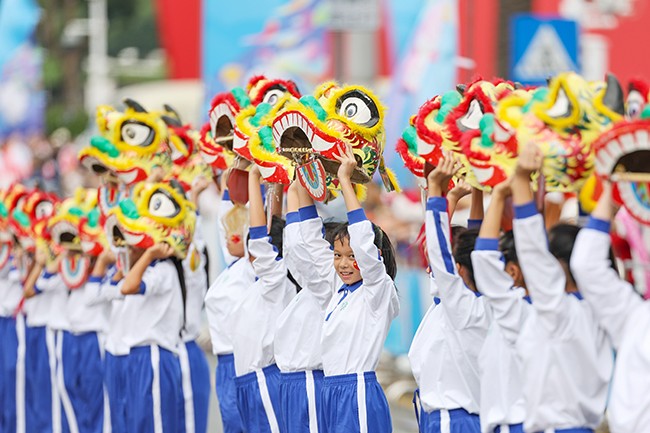
The audience cheers for the torchbearers during the torch relay
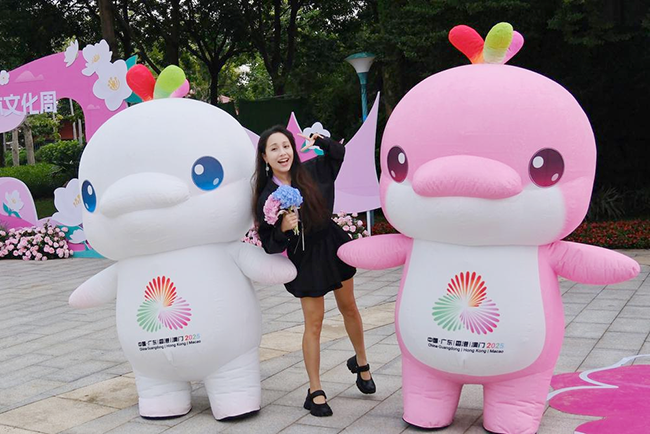
The National Games mascots become the national favorite
On November 2, the torch relay for China's 15th National Games began simultaneously in four cities, including Hong Kong, Macao, Guangzhou and Shenzhen. Such a cross-regional relay captured public excitement and vividly portrayed the essence of the "National Games for all" across the GBA.
Public engagement is also reflected in the event's scheduling. As Fencing and Rugby Sevens are favored by Hong Kong residents, they have been held in Hong Kong, and the same arrangement applies to Table Tennis and Women's Volleyball in Macao. This allows residents to enjoy top competition within their home cities.
Mass participation events have been robust, with 23 major and 166 minor events for amateur athletes, leading to over 11,000 final participants, including seniors, youth, and persons with disabilities. In Macao, a themed photography and short video contest encouraged citizens to capture moments of competitions, while community programs in Guangzhou and Shenzhen invited champions to engage directly with residents. With ticket prices starting at just 50 yuan, the Games have truly brought the competition closer to the people.
More than a showcase of athletic excellence, the 15th National Games serve as a living symbol of the GBA's integration. Smart technologies, eco-friendly practices, and public engagement underscore the unique appeal of the Games.
Reporter: Zhao Peng, Fu Yi

24小时最新动态

热点排行
图片新闻