



Culture
 2026/11/6
 source: International daily
 Print
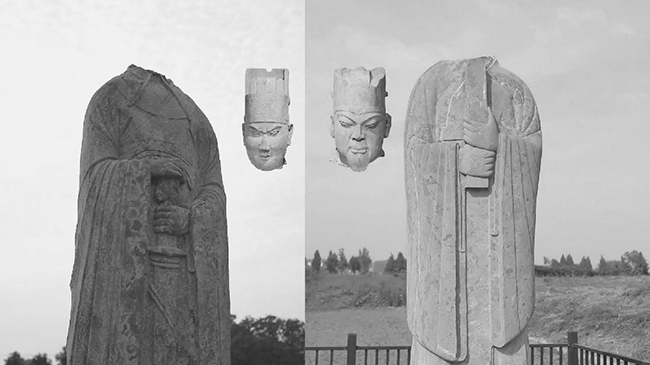
Two Song Dynasty stone carving relics returned from Australia are representative Song Dynasty (960-1279) artworks stolen from imperial mausoleums, according to a Chinese archaeologist.
The National Gallery of Australia handed over the relics to China's National Cultural Heritage Administration in Canberra on Wednesday. The two relics are a statue of a military official's head and a statue of a civil official's head.
The relics originated in Gongyi City, Henan Province, in central China, and preserve China's largest and best-preserved group of tomb guardian stone carvings from the Northern Song (960-1127) imperial mausoleums. The group includes tomb guardian stone statues known as shixiangsheng, featuring human figures and auspicious animals with exquisite carving.
"The shixiangsheng of the Song mausoleums represents the peak of Song Dynasty stone carving art. They are carved very realistically and should have been carved according to the attire of that time," said Sun Xinmin, a researcher at the Henan Provincial Institute of Cultural Heritage and Archaeology.
Under the Song ritual system, the spirit way of an imperial mausoleum has four civil official statues and four military official statues. The civil official head is from the Yongchang Mausoleum of Zhao Kuangyin, the founding emperor of the Northern Song Dynasty. It is the civil official statue closest to the imperial mausoleum, holding a flat scepter known as Hu, and has stood on the west side of the spirit way for more than a thousand years.
The military official head is from the Yongyu Mausoleum of Zhao Xu, another Northern Song emperor. In the 1990s, the head was stolen and taken abroad. Beside its stone body sits another military official statue of similar form, leaning on a long sword with an awe-inspiring expression, hinting at what the mutilated statue looked like.
With the return of the relics, the entire stone statue group is further completed, showcasing Song Dynasty aesthetics, culture, and art.
Photos
