



Culture
 2026/1/9
 source: International daily
 Print
Print
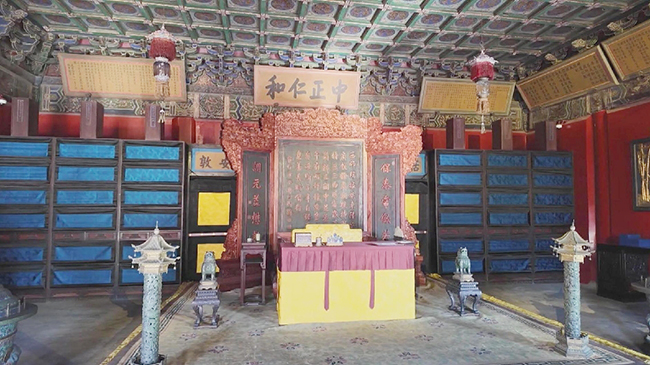
The Hall of Mental Cultivation (Yangxin dian), a key section of China's Palace Museum situated at the site of the Forbidden City in Beijing, reopened to the public on Friday.
The historic building and its cultural relics have undergone nearly a decade of research-based conservation and systematic restoration.
First constructed in 1537 during the Ming Dynasty (1368-1644), the Hall of Mental Cultivation later served as the residence and venue for daily state affairs for several rulers during the Qing Dynasty (1644-1911).
The Hall of Mental Cultivation owes much of its fame to its rooms in the Western Warmth Chamber (Xinuan ge), where Qing emperors received ministers and reviewed state reports.
Yet what piques visitors' curiosity even more is a royal private study, the Hall of Three Rarities (Sanxi tang), tucked into a modest adjoining room and named for having housed three legendary calligraphy scrolls dating back roughly 1,600 years.
According to the Palace Museum, the current exhibition in the Hall of Mental Cultivation faithfully reflects its original historical layout.
"The main chamber of the Hall -- the section hung with the plaque 'Zhong Zheng Ren He' (doctrine of the Mean, uprightness, benevolence, and harmony) -- has been restored to its exact layout and appearance as maintained since the reign of the Yongzheng Emperor, where informal imperial audiences were held. Adjacent to it, the 'Qin Zheng Qin Xian' (diligent in governance and be close to the wise) room within the Western Warm Chamber has also been returned to its arrangement from the Yongzheng period. It was a space for confidential discussions between the emperor and his ministers," said Wen Ming, deputy director of the Palace Museum's palace history department.
According to Wen, a total of 1,020 exhibits are on display in the hall.
Except for light-sensitive relics such as silk textiles, calligraphy, paintings, inscribed plaques and couplets, all the exhibits on display are original items, Wen said.
The conservation project, launched in 2015, emphasized in-depth research before any restoration work, setting a precedent for similar projects in the Palace Museum.
Photos
