





当前位置 : International Daily News
 发布日期:2026/4/3
 来源:International daily
 打印
打印
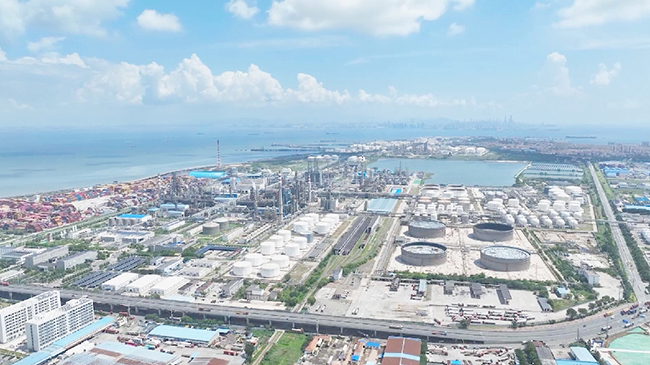
QINGDAO -- China is looking to power up its green energy ambitions by accelerating breakthroughs in the hydrogen and nuclear fusion sectors, which have both been identified as key growth frontiers during the country's 15th Five-Year Plan period (2026–2030).
The country has outlined green and low-carbon development as a defining feature of its modernization drive, with efforts to advance the green transition forming a central part of the 15th Five-Year Plan, a key blueprint which maps out China's development priorities through to the end of the decade.
The draft outline of the plan targets a cumulative 17-percent reduction in carbon dioxide emissions per unit of GDP over the next five years, while increasing the share of non-fossil energy in total consumption to 25 percent, up from 21.7 percent in 2025.
While China has already made great strides in its so-called "New Three" industries, namely electric vehicles (EVs), solar panels and batteries -- all of which have been playing an increasingly important role in the global transition toward renewable energy -- the country is now looking to step up its power generation through developing hydrogen production and nuclear fusion.
Traditional water electrolysis required for hydrogen production relies heavily on freshwater, which can limit the large-scale development of the green hydrogen industry. However, in the coastal city of Qingdao in east China's Shandong Province, China's first 100-kilowatt industrial-scale direct seawater hydrogen production project has broken new ground.
After more than a year of research and development, it successfully overcame the difficulties posed by the high impurity and strong corrosiveness of seawater, laying a new path for hydrogen production without the need for costly desalination.
"The challenge of direct hydrogen production from seawater lies not only in the production process itself, but more importantly in maintaining stable operation. Through our self-developed new electrode materials and anti-corrosion technologies, we have not only achieved long-term stable operation of the system, but also improved hydrogen production efficiency," said Liang Feng, a senior expert in development and planning at the Sinopec Qingdao Refining and Chemical company.
Data shows that China's annual hydrogen production and consumption has exceeded 36.5 million tons, accounting for 36.6 percent of the global total, underscoring the country's leading role in this field.

24小时最新动态

热点排行
图片新闻