





当前位置 : International Daily News
 发布日期:2024/4/20
 来源:International daily
 打印
打印
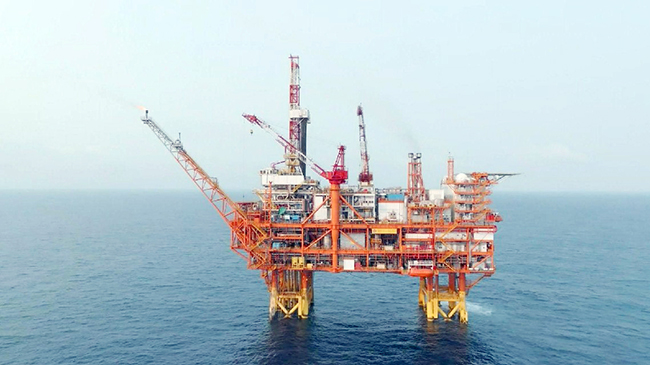
QINGDAO -- China is charting a new course in deep sea exploration thanks to the development of cutting-edge technologies and production of world-class equipment which is helping dig out key resources and enabling researchers to delve deeper into the scientific secrets of the sea.
Among the new breakthroughs is China's first self-developed offshore deep well, which was successfully commissioned in waters located about 200 kilometers southwest of the southern city of Shenzhen on Saturday.
The groundbreaking well, which yielded over 700 tons of crude oil on its opening test day, is distinct from traditional vertical wells, as it extends over 9,500 meters, with a horizontal reach of almost 8,700 meters and a vertical depth of around 2,000 meters, making it the deepest of its kind in the country.
"China has achieved a significant technological breakthrough in offshore long-distance and deep-well drilling. Utilizing this technology, we can tap into oil and gas resources within a 10,000-meter radius of the production platform, significantly enhancing the efficiency of our oil and gas field development," said Guo Yongbin, a chief engineer for the China National Offshore Oil Corporation.
Further innovations include Asia's first tubular type offshore oil and gas processing plant, currently undergoing final testing in the coastal city of Qingdao in east China. Scheduled for deployment to the Pearl River Mouth Basin at the start of May, this facility represents an efficient new model for China's exploration and extraction of offshore oil and gas resources.
China has also launched a national key research and development program focused on deep-sea technology and equipment. This initiative has already yielded several breakthroughs, such as the manned submersible Shenhai Yongshi, or the 'Deep Sea Warrior, which can reach a depth of 4,500 meters, and the Xuelong-2 icebreaker vessel, a major asset in China's polar scientific research equipment, filling previous gaps in capability.

24小时最新动态

热点排行
图片新闻