



Qingdao Today
 2025/12/4
 source:
 Print
Print
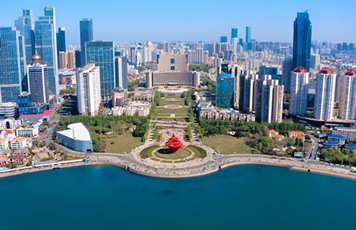
During the 14th Five-Year Plan period (2021-25), Qingdao's open economy has demonstrated resilient and upward growth momentum.
Foreign trade has achieved rapid development. In 2021, the total value of the city's imports and exports surpassed 849 billion yuan ($120.05 billion). From 2021 to 2024, Qingdao's foreign trade grew at an average annual rate of 9.1 percent, exceeding the national average by 1 percentage point.
The number of enterprises engaged in import and export activities increased by over 6,000 compared to the end of the 13th Five-Year Plan period (2016-20), reflecting an expanding base of globally active firms and broader international partnerships.
Cooperation with countries involved in the Belt and Road Initiative (BRI) has entered a stage of high-quality development. Customs data shows that in 2024, goods valued at over 58 million yuan circulated daily between Qingdao and BRI partner countries. Trade with these countries accounted for half of Qingdao's total foreign trade.
New drivers of trade, led by cross-border e-commerce, continue to emerge. Qingdao is now home to 2,563 registered cross-border e-commerce enterprises, with cumulative import and export value reaching 397.5 billion yuan. The city ranks fourth among 15 sub-provincial cities in enterprise numbers and accounts for one-fifth of Shandong's total.
During these years, Qingdao's service trade has remained the highest in Shandong province, exceeding 156 billion yuan in 2024 and representing 42.4 percent of the provincial total. The city has fully implemented 133 service trade innovation pilot measures, producing 28 domestically pioneering institutional innovations.
Proactive efforts in attracting investment and expanding globally have strengthened Qingdao's international cooperation. Currently, 13,000 foreign-funded enterprises are operating in Qingdao, including 412 projects by 179 Fortune Global 500 companies. Utilized foreign capital in Qingdao ranked first in Shandong during the 14th Five-Year Plan period, with manufacturing and high-tech industries accounting for 30.1 percent and 34.8 percent, respectively.
Photos
