



Qingdao Today
 2025/10/18
 source:
 Print
Print
The mutual visa-waiver policy between China and South Korea has injected vibrant energy into tourism and personnel exchanges, with Qingdao Jiaodong International Airport emerging as a primary gateway. In the first three quarters of this year, the airport saw a remarkable 23 percent year-on-year increase in border crossings, handling over 2.64 million passengers.
A key driver of this growth has been inbound travel from South Korea. A notable 71 percent of the 369,000 international arrivals during this period were South Korean nationals. Overall, an impressive 269,000 foreign travelers utilized the visa-free policy to enter through Qingdao.
China began a visa-waiver pilot program for South Korean citizens starting Nov 8 last year. The implementation of this reciprocal visa-free policy has breathed new life into tourism and personnel exchanges between the two countries.
On the first day of the policy's implementation, a noticeable surge in outbound travel to South Korea was observed, with many tour groups starting their first visa-free trips.
Qingdao airport, a crucial aviation hub in Northeast Asia, facilitates this connection with 39 daily round-trip flights to major South Korean cities like Seoul, Busan, and Jeju. The Seoul route, in particular, has become one of the busiest corridors between the two nations, ranking first in China for flight frequency and second for passenger volume from January to September.
To capitalize on this momentum and improve its transit function, Qingdao airport has launched a convenient service brand. This initiative builds a smooth transit network covering 25 domestic cities and offers specialized privileges for "China–South Korea–Japan" transit passengers, covering dining, accommodation, and leisure activities.
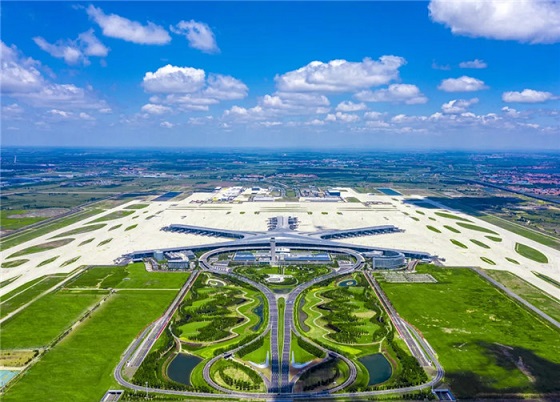
Qingdao's airport is a crucial aviation hub in Northeast Asia that facilitates this connection with 39 daily round-trip flights to major South Korean cities. [Photo/WeChat account: shsfqgwh]
Photos
