



Qingdao Today
 2024/11/18
 source:
 Print
Print
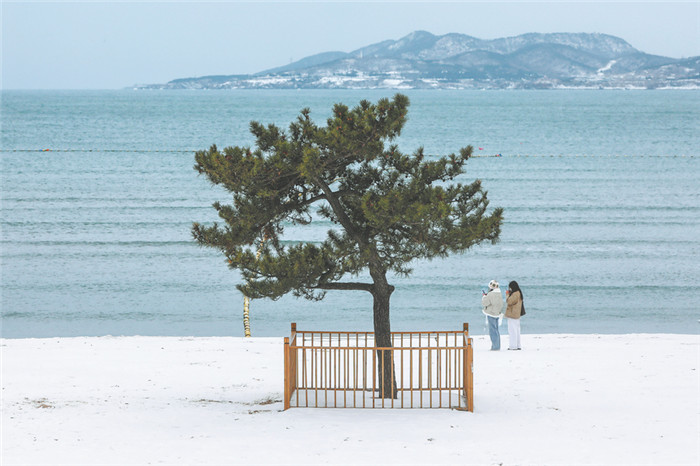
A winter scene at the First Bathing Beach in Qingdao, Shandong province. HE YI/FOR CHINA DAILY
Beach tree branches into people's affection as favored landmark.
It's not exactly a common beach sight. Beaches have many attractions, but a tree is not usually one of them. The First Bathing Beach in Qingdao, Shandong province, is different. A Japanese black pine stands proudly, even defiantly, alone, its roots firmly in the sand. Nicknamed Hei Song (black pine) by the local residents, it has become a popular spot for people to take photos.
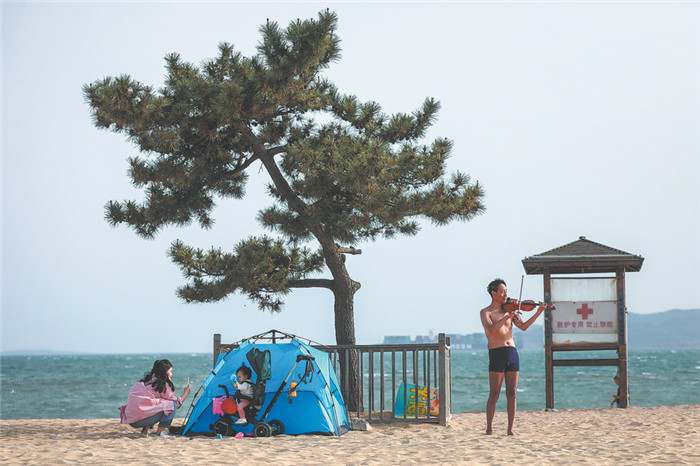
A musician entertains a family camping in the shade of the tree. HE YI/FOR CHINA DAILY
Although no one knows how the tree has survived through harsh temperatures and typhoons, it has grown steadily. Its green canopy has seen generations of bathers, from childhood to old age, coming and going. Once the largest beach in Asia, the stretch of sand can accommodate tens of thousands of people.
During the rehabilitation of beach in 1984, about 20 Japanese black pines were planted. Only one survived a ferocious typhoon the following year. Japanese black pines were first imported to Qingdao in 1901, and were usually planted on the hills, along the coasts, and in parks.
In the summer of 2004, to protect the tree, the beach authorities fenced off the area around it. Since then it has thrived.
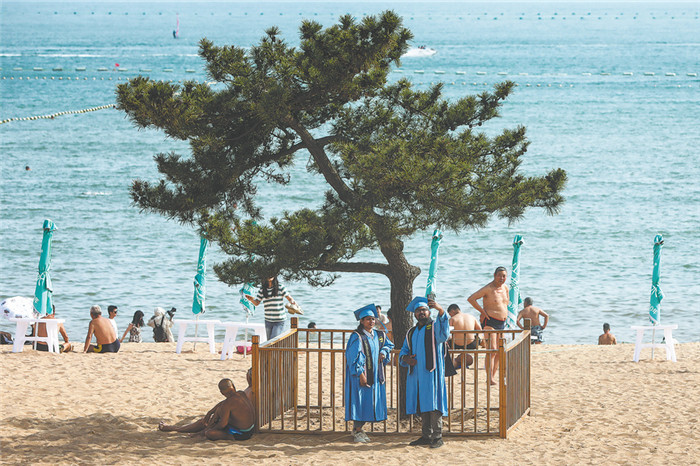
Two students take their graduation photo in front of the tree in June. HE YI/FOR CHINA DAILY
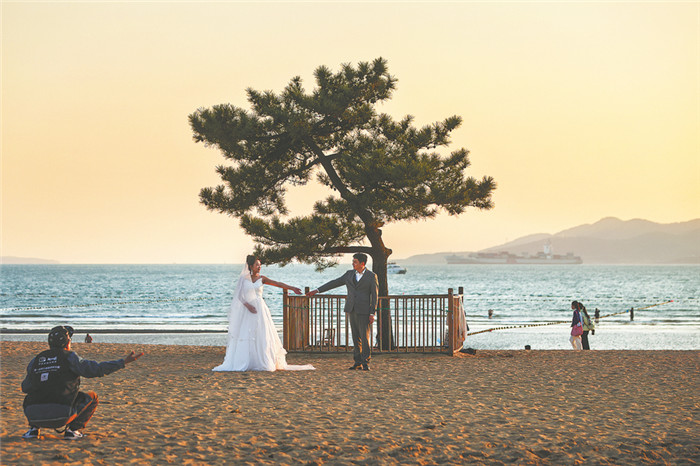
True love blossoms under the tree in a romantic moment during a photo shoot. HE YI/FOR CHINA DAILY
Photos
