





当前位置 : 北美新闻
 发布日期:2023/11/6
 来源:
来源:
 打印
打印
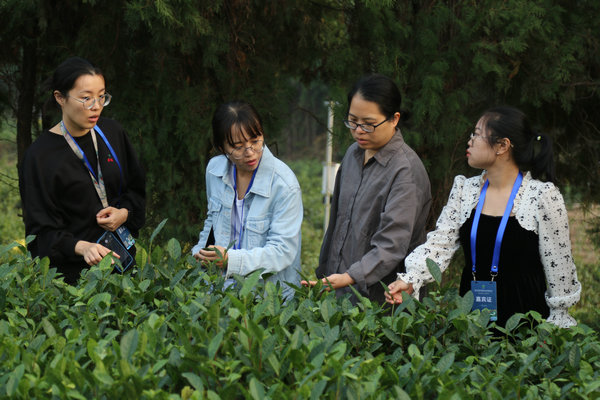
Participants of the 32nd China Tea Science and Technology Annual Conference visit a tea house in Laoshan district of Qingdao, Shandong province on Tuesday. [Photo by Xie Chuanjiao/chinadaily.com.cn]
Experts and scholars called on more efforts to accelerate the digitalization of the tea industry on Monday, as a way of promoting efficient production and pursue high-quality development.
The digitalization of the tea industry in China is much needed. The tea production area in the country has experienced rapid growth but faces challenges such as an imbalance of supply and demand, as well as old-fashioned production and management methods, said Jiang Renhua, director of the Tea Research Institute of Chinese Academy of Agricultural Sciences at the opening ceremony of the 32nd China Tea Science and Technology Annual Conference held in Qingdao, Shandong province.
Held on Monday and Tuesday, the event invited more than 800 participants from around the country including officials, researchers and entrepreneurs to discuss the upgrading of the tea industry and achievements in scientific and technological transformation.
China is the world's largest tea producer, exporter, and consumer. In 2022, China produced 3.35 million metric tons of tea, accounting for nearly the half of the global tea production, according to Statista, a global data platform.
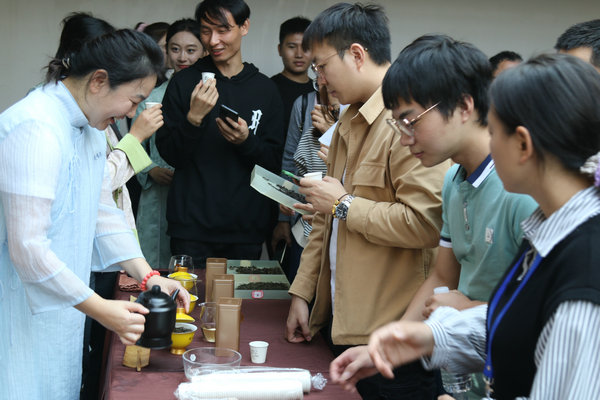
Participants of the 32nd China Tea Science and Technology Annual Conference visit a tea house in Laoshan district of Qingdao, Shandong province on Tuesday. [Photo by Xie Chuanjiao/chinadaily.com.cn]
To address the industry's challenges, Jiang proposed a comprehensive digital transformation that covers every aspect of the tea production chain, from picking to processing and sales.
One notable example of this digital transformation is the concept of intelligent tea gardens. By leveraging modern technologies like the internet of things, big data, artificial intelligence, and cloud computing, tea growers can monitor the growth of tea trees and their surroundings with unprecedented precision.
According to Liu, these monitoring systems can collect data on soil conditions, moisture levels, humidity, light, solar radiation, precipitation, and infestations. For example, one system can achieve an impressive 92.66 percent accuracy in diagnosing tea diseases.
While significant progress has been made in monitoring methods, challenges remain. High-performance sensors that can accurately detect soil conditions are in high demand but still limited in availability.
Liu noted that research and development efforts, as well as the installation of such sensors, face challenges due to the diverse soil conditions in tea-growing regions.
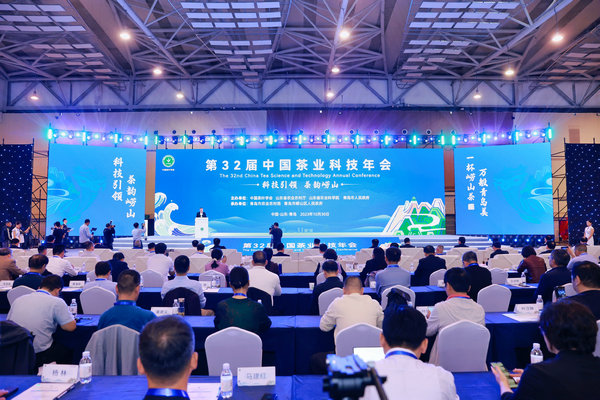
The 32nd China Tea Science and Technology Annual Conference was held in Laoshan district of Qingdao, Shandong province from Monday to Tuesday. [Photo provided to chinadaily.com.cn]
He emphasized the importance of using the data collected to build a scientific model for tea garden management. By harnessing this wealth of data, the tea industry can make informed decisions to enhance efficiency and productivity.
The 32nd China Tea Science and Technology Annual Conference took place in the Qingdao's Laoshan district. The district is named after the sacred Mountain Lao, boasting the highest peak along China's coastal line, reaching 1,132 meters.
This year marks the 70th anniversary of a campaign that introduced tea varieties from South China to North China, ending the absence of tea plantations in the northern part of the country. Over the decades, the tea industry has grown to become a hallmark of Shandong province, with Laoshan district being an example of its success.
Su Wenpeng, vice director of the Laoshan district, highlighted the exceptional environment in which Laoshan tea thrives.
With fertile land, mineral-rich water sources and a favorable climate, the district has become renowned for its tea production. Local authorities provide a minimum of 50 million yuan ($6.8 million) each year to support the development of the tea industry in the district.
To further enhance the quality of tea products, Su said the district has implemented big data and internet of things-powered platforms to manage local tea gardens.
24小时最新动态

热点排行
图片新闻